Joab studied mechanical engineering and initially imagined himself designing machines. That changed when he realised how much modern hardware depends on semiconductors and became curious about what really happens behind the scenes of chip production. To explore that world, he chose Silicon Box for his elective internship and deliberately picked a fast‑growing environment for the hands‑on learning it offered.
In this edition of Spotlight in the Box, we chat with Joab about what it’s like to stay agile and resilient as an intern, transitioning roles to support shifting business priorities. From moving into the process team to taking on cleanroom responsibilities, his experience shows the kind of pressure, problem‑solving and on‑the‑job learning that come with life inside an advanced packaging foundry. It also highlights how seeking out experienced mentors and staying open to feedback can turn a few intense months into a strong foundation for a long‑term career in the semiconductor industry.
What is interesting to you about semiconductors?
What interested me about semiconductors is how much of our daily life depends on chips. Phones, laptops, cars, even small electronic devices rely on them, and the demand for this technology keeps growing. I was curious about what really happens behind the scenes in the companies that make these chips and how they are actually produced, not just the brand names we hear about.
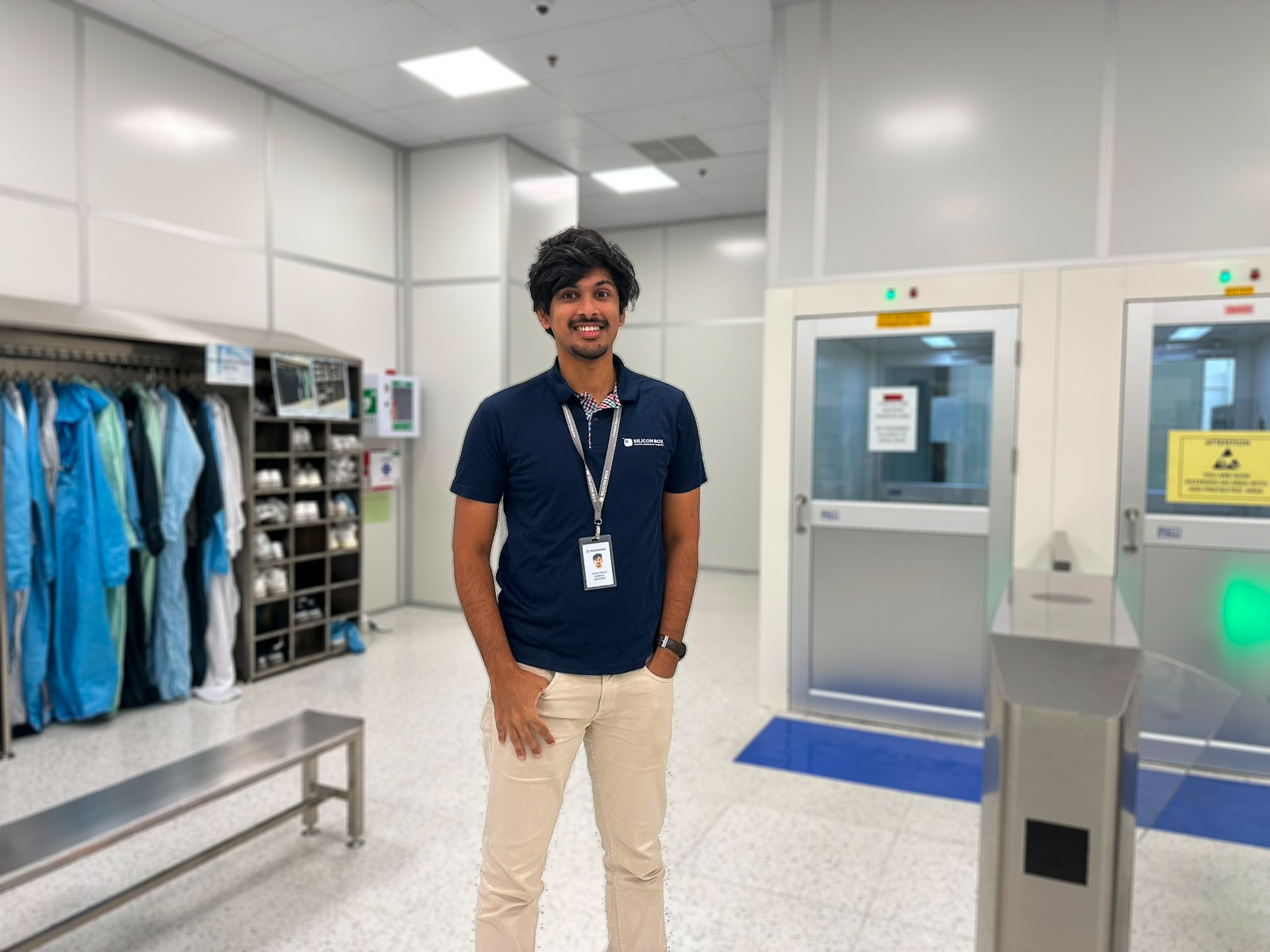
When I started looking into Silicon Box, I learned about cleanrooms and had never seen one before. The first time I stepped inside, it felt completely different from the usual manufacturing environments I knew. The air, the layout, the way everything is controlled — it made me wonder why it needs to be “that clean” and what processes are happening that require so much care.
“Those small details were intriguing to me. I wanted to know how chips are made and why the environment has to be so precise is what drew me to choose the semiconductor industry for my internship.”
Why did you choose Silicon Box for your internship?
I chose Silicon Box because semiconductors were completely new to me, even though I already had some experience in manufacturing. I like exploring new things, even when I don’t fully understand them yet, so I felt this was a good chance to step into a different field. I was also specifically looking for a startup environment. In my previous internships with startups and niche teams, I could pick up a wider range of skills instead of being limited to one narrow task.
“What attracted me to Silicon Box was the opportunity to get very close to the actual tools and processes. Here, the learning is very hands-on, and that matters to me because it’s the way I learn best.”
You mentioned that you specifically wanted to join a startup and that you learn best through hands‑on experiences. During your internship at Silicon Box, can you walk us through a moment that really captured what working in that kind of environment felt like for you? What happened, how did you feel at the time, and how did you respond?
Initially, I was hired as an equipment intern. After about a month, there was a meeting where manpower had to be reprioritized, and I transitioned into the process department. After a few weeks of learning how to use the new tool, my lead asked how I was doing. Before I could respond, my mentor recommended that I start working in the cleanroom because he was confident I was able to work independently and take responsibility for processing certain lots.
At that time, I was the only one on day shift, so my first reaction was, “Whoa, okay, let’s see how this goes.” I didn’t say no. I went down to the cleanroom the next day, looked around, and thought, “Where do I start? What have I learned so far? How do I apply it here?” In that moment, I had to rely on everything taught to me in those first two or three weeks and build from there. I definitely felt a lot of pressure on that first day. That experience showed me that I learn fastest when someone teaches me by showing me how to do it step by step, and then gives me room to practice.
“Of course, it wasn’t perfect. Sometimes I made mistakes and felt scared because I didn’t yet know how to fix them. In those moments, my mentors were critical but also patient. They answered even my “dumb” questions, and they showed me how to correct issues instead of just telling me what went wrong. Knowing that, if I put in the effort, I could grasp things quickly gave me confidence.”
For me, that short period was an eye‑opener into how a startup works: you can be moved quickly to where you’re needed, you get pushed to learn on the job, and you discover what you’re capable of — but it only works if you have good engineers and mentors around you.
After this experience, what would your thoughts be about working or doing an internship in a startup?
I feel that startups are really the place to grow. Most of my internship was very hands-on. I spent months on the same tool, chasing root causes for different defects, learning how to recognize signatures and patterns, and seeing how each adjustment affected the outcome. After a while, you really know the machine — not just the numbers on a screen, but what is actually happening inside. For me, that kind of learning is very different from just downloading data to a USB and analyzing it at a desk. You understand it when you’ve touched the tool and solved the problems yourself.
In the beginning it was tough because we were a small team, but over time more people joined, and things became smoother. What made the biggest difference was the people. If you have a good group around you, you can be happy and keep learning, even when the work is intense. As long as you have a supportive team, I think your internship in a startup can go very well.
What advice would you give someone who is considering joining Silicon Box?
I’d say be ready for a fast‑paced environment. Companies with a startup environment like Silicon Box, things move quickly, especially if you’re new to this industry. That’s not a bad thing, but you need to be intentional about how you learn. At the same time, develop an investigative mindset, especially if you’re joining the process team. Don’t just accept problems at face value. Be curious, dig into the details, and keep asking “why” until you find the real root cause of any issue. If you combine that kind of curiosity with support from your mentors, you can handle the pace and grow a lot here.
“My biggest advice is: if you have good mentors, use them well. Don’t stay in your own bubble and think the internet alone will teach you everything. You can read and Google as much as you want, but it’s very different from learning directly from engineers who’ve been doing this for 10, 15, even 20 years. Ask them questions, observe how they think, and don’t be shy about tapping into that experience.”
What did success look like for you?
For me, success started with feedback. When your own engineers and even people from other departments tell you that you’re doing well, it’s a big motivation to keep going and improve. That kind of recognition matters, especially when you’re new to the industry.
The bigger part of success, though, was being able to actually solve issues. After I learned the process and understood the tool, there were times when I could spot a problem that had been happening for a while and help find a solution, or at least a way to control it, during my four‑to‑six‑month internship. When you can do that, and then go back to your mentors and engineers and explain what you found and how you fixed it, they’re proud of you — and you’re proud of yourself too.
"Even if the issue is “small” compared to everything else happening in the fab, solving it in a short time, in a new industry, feels like a big achievement. That combination of useful feedback and real problem‑solving is what made me feel I’d had a really good internship."
As a GenZ fresh grad, any other advice for your peers?
Since I’m new to this industry, my main advice to fresh grads is to stay open.
Be open to pressure, to learning, to feedback, and even to criticism. You might be put into situations that feel uncomfortable or intense at first, but if you’re open to them, you can grow a lot from the experience. Those are the things that help you understand where you stand and how to improve. In my earlier internships, I was scared because I felt I didn’t know enough or didn’t know how to contribute. Over time, with more experiences, you start to see patterns, you gain confidence, and eventually you can contribute in an industry you really want to be in. That’s when all the pressure starts to make sense.
“Many of us may rather feel comfortable than go through stressful moments, but some pressure is part of the learning curve. Internships are usually only a few months, and they’re a chance to test yourself, make mistakes, and see how you respond. Use that time to lean into the work instead of avoiding it.”
Joab’s story shares what life in a fast‑growing advanced packaging semiconductor foundry like Silicon Box could feel like up close: shifting priorities, cleanroom routines, and opportunity for real ownership. Just as important, we hope it shows how we develop young engineers by having experienced mentors who are open to honest feedback while giving you space to investigate and solve problems.
For students and fresh graduates considering semiconductors, his story is a reminder that resilience is only part of the equation. Choosing a company that is growing at the right time, in the right part of the value chain, gives you the chance to build strong foundations — skills, systems thinking, and professional habits — in an environment that keeps opening new opportunities instead of stagnating.
When growth and support come together, you’re not just surviving your first fab job; you’re building a career that can scale with the industry.
Explore Careers at Silicon Box
here.